

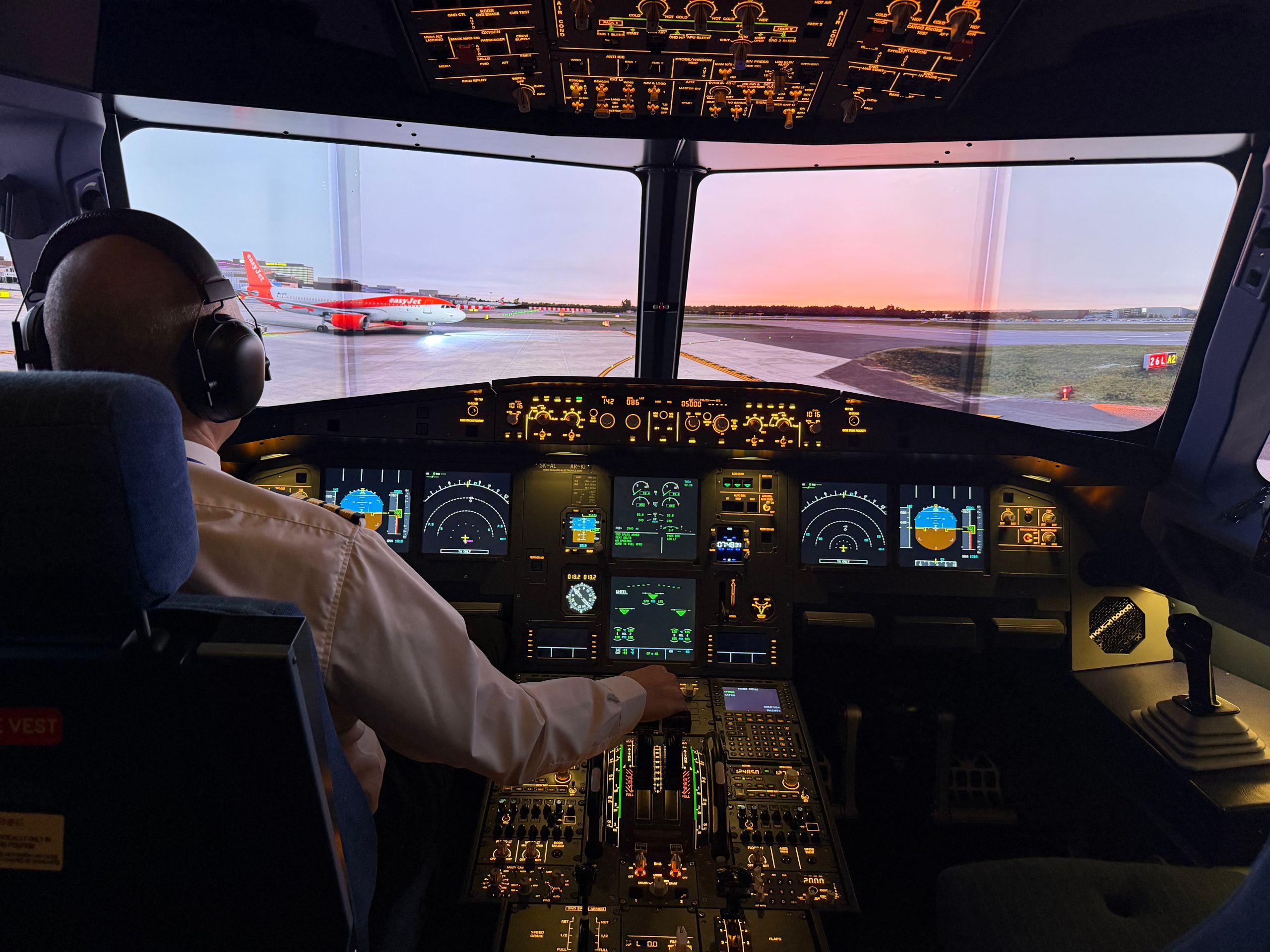
We are proud to unveil the world’s first AI-enabled Airbus A320 flight simulator, now operational at our state-of-the-art training facility near London Gatwick Airport. This pioneering development harnesses cutting-edge artificial intelligence to redefine the boundaries of flight simulation, delivering an immersive and adaptive training environment. Designed to elevate high-pressure decision-making, multi-crew coordination, and situational awareness, it represents a transformative leap forward in aviation training excellence.
Transforming Traditional Pilot Training
Unlike conventional flight simulators, AI-enabled systems offer dynamic adaptability to pilot inputs, generating realistic and unpredictable scenarios that significantly enhance training outcomes. This advanced capability strengthens core competencies such as decision-making, multi-crew coordination, and situational awareness—critical elements in aviation safety. The training remains invaluable throughout a pilot’s career, fostering continuous improvement in safety, teamwork, and operational efficiency.
Designed to support full gate-to-gate operations, this advanced simulator offers early-career pilots invaluable exposure to real-world procedures within a safe and controlled training environment. It features comprehensive air traffic control coverage, including interactions with ground and cabin crew, replicating the complete operational spectrum. This immersive experience enables rigorous evaluation of crew resource management against robust performance metrics, ensuring that safety-critical competencies are developed and reinforced effectively.
Visuals and Haptics
The simulator incorporates a pioneering visual engine that delivers industry-leading graphical fidelity, rendering city skylines and terrain contours with striking realism. This enhances situational awareness and supports visual navigation by making geographic references instantly recognisable.
Complementing the visual immersion, the simulator is equipped with multiple haptic transducers—an innovation not typically found in traditional fixed-base simulators. These transducers provide nuanced tactile feedback from both the aircraft and surrounding environment, playing a critical role in bridging the experiential gap between fixed-base and full-motion simulation platforms.

